
48% Usage Gap Shows Why Virtual Cards Still Lag Adoption
Companies may be chasing automation, but late payments and cash flow strain are pushing a deeper shift in how finance teams think about modern payables.
The persistent drag of manual processing is creating unexpected momentum for virtual cards, which could reshape B2B payments.
The PYMNTS Intelligence report “Why 2025 Could Be the Year of the Virtual Card” found that businesses continue to rely on checks and other manual workflows even as 8 in 10 plan to improve their payment processes.
Businesses of all sizes still feel the financial impact of slow invoices, inconsistent cash flow and outdated reconciliation methods. Virtual cards, long viewed as a niche payment tool, have emerged as a practical solution to payment delays, fraud exposure and supplier friction. High interest among chief financial officers stands in contrast to current usage, revealing a gap between enthusiasm and adoption, per the report.
Key findings include:
- Late payments affect 97% of marketing and creative agencies in the United States, and 65% reported at least a quarter of invoices paid late. These delays directly contribute to unpredictable cash flow.
- The primary benefit of virtual cards is improved security and reduced fraud risk, according to 46% of users, reflecting concern over rising check fraud and manual-processing-related exposure.
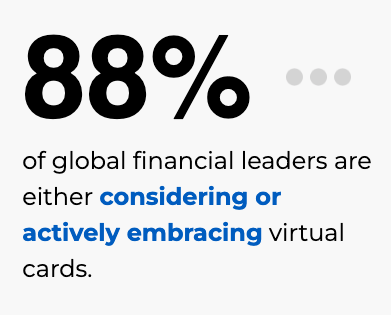
- Interest in virtual cards outpaces implementation, as 88% of global financial leaders are either considering or actively embracing them, yet only 48% use them.
The report’s broader findings pointed to a system weighed down by paper-based habits. U.S. small businesses, for example, lose an average of $39,406 annually due to late payments, with nearly 1 in 10 losing more than $100,000. Many tie these issues directly to manual processes that slow reconciliation and obscure financial visibility. For agencies and small firms, late payments can derail growth plans or force them to postpone investments. These delays ripple outward and damage relationships.
Virtual cards are a corrective force for these long-standing pressures, the report said. They automate payments from generation to reconciliation, reduce human error, and give finance teams real-time tracking. There are also security advantages to tokenized, single-use card numbers, which help protect buyers and suppliers from increasingly sophisticated fraud schemes. Their preset spending limits and digital controls offer additional protection while reducing administrative workloads. These features help suppliers get paid faster.
Yet adoption challenges remain.
Many businesses continue to believe virtual cards are complex to implement or difficult for suppliers to accept. Education is the biggest unlock, per the report. Buyers often underestimate how quickly virtual card programs can integrate into existing systems, and suppliers may not realize how much time they can save by eliminating manual processing. Once implemented, the tools deliver immediate operational relief.
The report also pointed to fast-growing verticals. Healthcare and construction are early movers, and projections show strong multiyear growth ahead. One estimate expected the B2B virtual card market to rise from $14.7 billion in 2025 to $61 billion by 2032. Adoption is expanding.
Other findings included stronger buyer-supplier relationships among firms using automated virtual card workflows, improved working capital management, and rising demand for straight-through processing that removes friction on both sides of the transaction.
The post 48% Usage Gap Shows Why Virtual Cards Still Lag Adoption appeared first on PYMNTS.com.