
Why 60% of Debit Card Users Have Become Merchant Loyalty Targets
For years, loyalty followed credit, but new data shows that rewards are now chasing spending habits shaped by caution rather than leverage.
That is the central finding of PYMNTS Intelligence’s Embedded Finance Tracker, titled “Rethinking Rewards With a Loyalty Platform for the Debit Generation.”
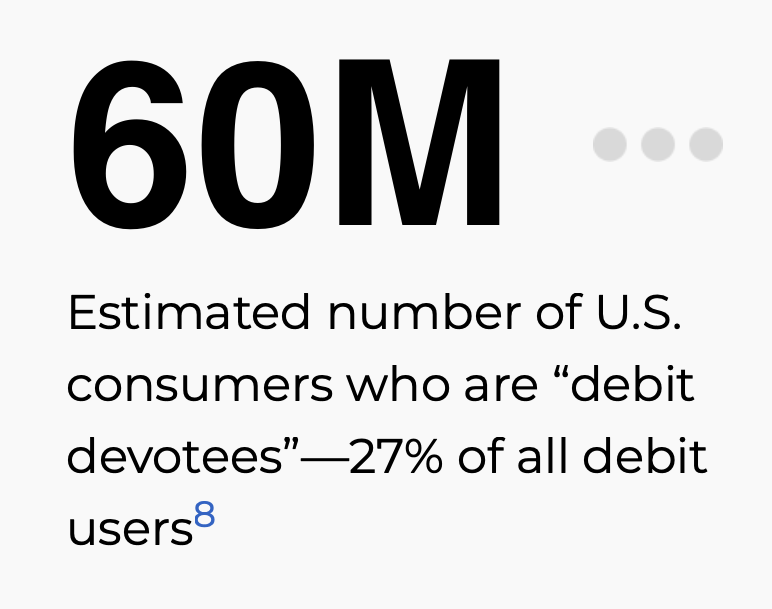
The report argues that co-branded debit cards are moving from a niche concept to a viable loyalty strategy as consumer preferences shift away from revolving credit. Debit already accounts for nearly one-third of U.S. consumer payments, according to Federal Reserve data cited in the report, and roughly 60 million Americans now prefer debit over credit.
Tighter lending standards, generational debt aversion and regulatory changes have combined to weaken the dominance of traditional credit-based rewards. In response, brands are testing new ways to reward spending without extending credit or assuming balance sheet risk.
The report highlights Galileo’s launch of a co-branded debit rewards platform with Wyndham Hotels & Resorts as an early proof point.
Unlike traditional debit programs that struggled to support rewards economics, this model is designed around loyalty from the outset. Galileo supplies the banking infrastructure, compliance and rewards mechanics, allowing brands to focus on customer acquisition and engagement. The result is a debit product positioned less as a payment tool and more as a loyalty platform tied directly to everyday spending.
Several data points underscore why brands are paying attention.
- About 60% of users who signed up for the Wyndham Rewards Debit Card set up direct deposit, a signal of deeper engagement and repeat usage rather than one-time experimentation.
- An estimated 27% of U.S. debit users are classified as “debit devotees,” consumers who rely on debit as their primary payment method and have limited access to or interest in credit.
- Debit cards account for nearly one-third of all U.S. consumer payment transactions, a share that continues to grow as younger consumers age into their prime spending years.
Beyond these headline numbers, the report points to a broader structural shift in loyalty economics. Credit-based rewards have traditionally depended on interchange revenue, interest income and balance growth. Those levers are increasingly constrained by regulation and consumer behavior. Debit programs, by contrast, operate with simpler cost structures and fewer regulatory burdens when issued through eligible sponsor banks. This creates more predictable economics for brands and removes the credit risk that has historically limited participation in rewards programs.
The findings also suggest that debit-based loyalty aligns more closely with how younger consumers manage money. Gen Z and millennials are described as debt-averse and budget-conscious, yet still motivated by recognition, status and perks. For these consumers, rewards are expected, but debt is not. Debit loyalty programs allow brands to meet those expectations without pushing users toward borrowing.
The Wyndham example shows that even modest benefits, such as automatic status and straightforward points earning, can drive meaningful engagement when paired with everyday spending.
The report also frames co-branded debit as a way for brands to unlock underused assets. Hotels, retailers and marketplaces can fund rewards using inventory, discounts or off-peak capacity rather than cash subsidies.
This approach lowers marginal costs while strengthening customer relationships. Over time, the report suggests, interoperable loyalty ecosystems could emerge, allowing consumers to earn and redeem rewards across brands without relying on credit cards as the connective tissue.
Taken together, the findings point to a reframing of what a payment card represents. In this model, the card is not the product; loyalty is. Debit simply becomes the delivery mechanism.
For brands facing slower growth from traditional credit partnerships, the report’s message is direct. Debit-first consumers are no longer a fringe audience. They are significant, engaged and increasingly central to the future of loyalty.
The post Why 60% of Debit Card Users Have Become Merchant Loyalty Targets appeared first on PYMNTS.com.